


In the world of luxury perfumery, the great classics are never abandoned. On the contrary, they are reinterpreted, rewritten, and adapted to the present. Revisiting iconic perfumes represents one of the strongest trends of recent years: a way to preserve olfactory memory while making it more contemporary, more accessible, and closer to today’s emotions and desires.
Miss Dior, Shalimar, La Vie Est Belle, Serpentine by Roberto Cavalli and Colonia Perfume by Acqua di Parma are emblematic examples of how contemporary perfumery is transforming the very concept of “classic”.
Iconic Perfumes and Modern Revisitations: Why They’re So Popular
Reinterpretations don’t happen by chance. Today’s audiences seek fragrances that tell a story, but are also more fluid, more personal, and less rigid.
The fashion houses respond to this need by addressing:
- more enveloping or lighter concentrations
- gourmand, musky or powdery notes
- softer and more sensual olfactory structures
The result is a new generation of fragrances that retain the original DNA, but interpret it in a contemporary way.
Miss Dior: The couture rose becomes a modern emotion

Miss Dior has always been synonymous with French elegance and sophisticated romanticism. Born as a bold chypre, over the years it has gradually transformed into a more floral, fruity, luminous, and immediate fragrance.
Current revision focus on:
- the damask rose
- jasmin
- fruity and velvety accords
At the top, a juicy and gourmand accord of elderflower and blackberry, with facets of crisp and fresh fruit jam. At the heart, jasmine, the essential leitmotif of the fragrance created in 1947, changes today. What’s changed is the new look of the floral component, bolder than ever with its appetizing fruits intensified by the woody base. The result is a fragrance that retains Dior’s couture soul, but translates it into a more emotional and contemporary femininity, less formal and more sensorial.
Shalimar: the legendary oriental that reinvents itself
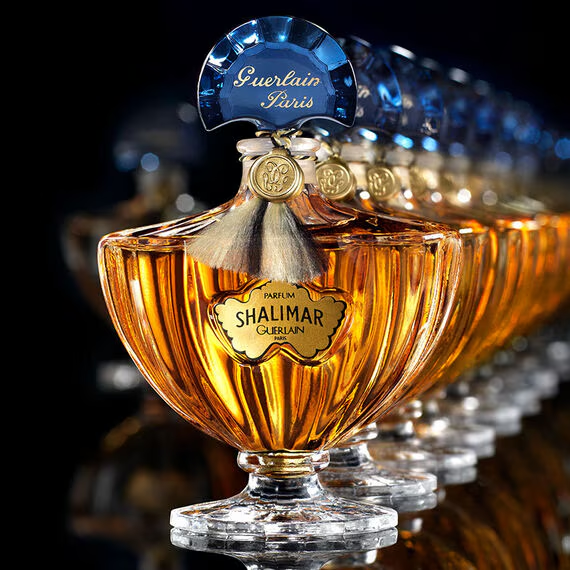
Shalimar is one of the absolute pillars of perfumery history. Its oriental structure, based on vanilla, citrus, and balsams, defined an era. However, its original intensity can be challenging today.
Modern reimaginings of Shalimar work on:
- creamier and more enveloping vanillas
- gourmand and amber facets
- brighter and softer openings
Thus, the legend remains intact, but becomes more wearable, more suited to everyday life and contemporary sensibilities. Shalimar does not lose its sensuality: it expresses it with greater elegance and control.
La Vie Est Belle: the gourmand that evolves into refinement

La Vie Est Belle marked a turning point in modern women’s perfumery, imposing a new idea of gourmand: sweet, yes, but sophisticated.
The most recent revisions shift the focus to:
- more natural and milky vanillas
- softer olfactory textures
- a less aggressive sweetness
These versions tell the story of a more intimate, less flaunted femininity, where pleasure becomes a personal experience. It’s proof that even an extremely popular perfume can mature without losing its appeal.
Roberto Cavalli Serpentine: Contemporary Seduction and Instinct

Serpentine Parfum embodies Roberto Cavalli’s boldest spirit. It’s a fragrance that focuses on:
- amber notes
- spicy accents
- intense and magnetic flowers
Here, the reinterpretation is primarily stylistic: a new design, with a large golden snake enveloping the outside of the bottle. Not a return to the past, but a modern reinterpretation of seduction, designed for a confident, instinctive woman who loves bold, distinctive fragrances.
Acqua di Parma Cologne: A Contemporary Reinterpretation

Acqua du Parma’s new celebrated Colonia is now available as an eau de parfum, a contemporary reinterpretation of the iconic Colonia, the first fragrance launched by the Maison in 1916. This new and intense version brings new light and life to the fragrance, adding an energetic combination of ylang ylang and patchouli to the unmistakable citrus notes.
Perfume Revisitations: A New Idea of a Classic
The current reinterpretations of iconic perfumes speak of a profound change in luxury perfumery: no longer static fragrances, but living organisms, capable of adapting to times, tastes, and emotions.
Wearing a reinterpretation means choosing a perfume with a history, but experiencing it in a personal way. It’s the meeting point between memory and innovation, between tradition and freedom of expression.